Top 10 High Speed Diaper Packing Machines for Buyers?
Choosing a High-speed diaper packing machine is not simply a race for maximum output. Buyers must examine sealing stability, film control, changeover time, and product protection. A machine may claim 800 packs per minute, yet poor alignment can create crushed edges, loose wrapping, or frequent stoppages.
W. Edwards Deming, a respected manufacturing quality expert, said, “Quality comes not from inspection, but from the improvement of the production process.” This principle fits diaper packaging closely. Reliable performance begins with controlled feeding, accurate counting, consistent bag formation, and responsive sensors. Operators should also inspect real production samples, not only polished showroom demonstrations.
This guide reviews ten leading machine options for serious buyers. It considers speed, automation, maintenance access, energy use, footprint, and after-sales support. The comparison also looks at diaper sizes, stacking patterns, packaging materials, and integration with upstream production lines. Small details matter. A poorly placed sensor can interrupt an entire shift.
Some specifications deserve skepticism. Marketing figures often reflect ideal conditions, not mixed products or demanding factory schedules. That is where this review remains practical. It asks what happens during film changes, jam recovery, night shifts, and routine cleaning. No machine is perfect. Even an advanced High-speed diaper packing machine can underperform without skilled setup and preventive maintenance.
Buyers should treat the final ranking as a decision aid, not an absolute answer. Factory layout, labor availability, target capacity, and local technical support may change the best choice. A cheaper machine can become expensive when spare parts arrive slowly. Reliability is measured over months, not during one impressive demonstration.
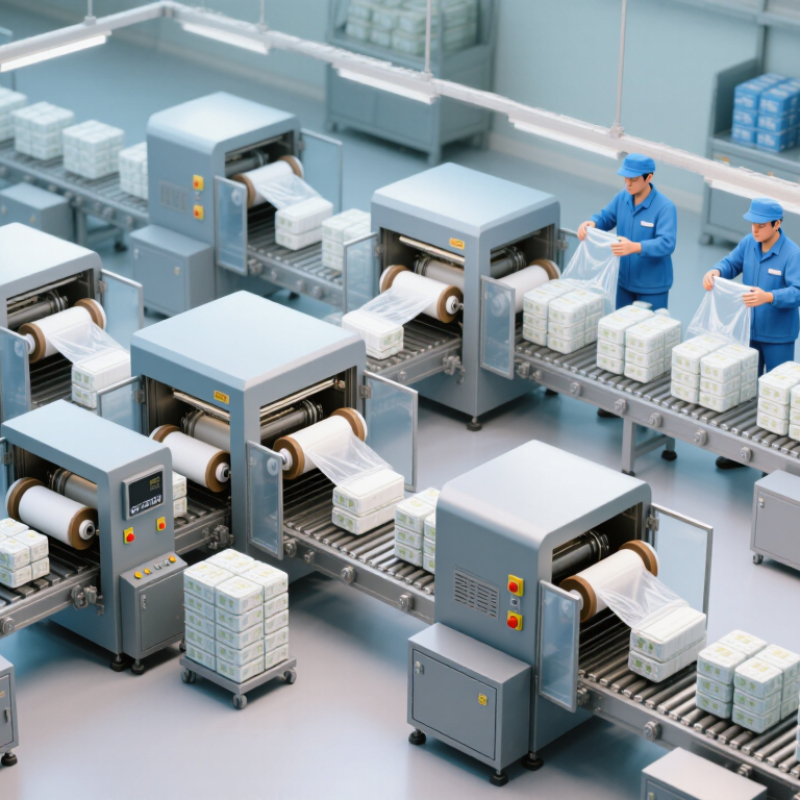
Diaper Packing Machine Fundamentals: 400–1,200 Packs/Minute Throughput
Top 10 High Speed Diaper Packing Machines for Buyers?
Diaper Packing Machine Fundamentals: 400–1,200 Packs/Minute Throughput
High-speed diaper packing machines commonly operate between 400 and 1,200 packs per minute. However, the advertised maximum rarely reflects every production condition. Pack size, diaper dimensions, bundle count, film thickness, and sealing temperature can reduce actual output. A machine running at 1,200 packs per minute may produce fewer saleable packs during frequent size changes.
In practical testing, buyers should measure stable throughput, rejection rate, and changeover time. A 60-diaper bundle needs consistent counting and careful compression. Uneven stacks can create wrinkles, weak seals, or misaligned bags. Servo-driven feeding improves control, while sensors help detect missing products and film tracking errors. The infeed conveyor also matters. Small timing errors can stop the entire line.
Experienced operators should request a factory trial using their actual diaper sizes and packaging film. Record output over at least one continuous hour, not only during a short demonstration. Check access to sealing units, cleaning points, spare parts, and operator controls. Safety guarding and emergency stops must fit the facility’s requirements. I have seen buyers focus too heavily on speed and overlook maintenance access. That mistake becomes expensive. A slightly slower machine may deliver higher usable output with fewer interruptions. Performance claims should be verified against written test data, not accepted from a display screen alone.
Top 10 High-Speed Machines: Output, Bag Formats, and Automation Levels
A practical top-ten comparison starts with output, not advertising claims. High-speed diaper packing machines commonly deliver 80 to 220 bags per minute, depending on diaper size, pack count, and material flow. Compact machines suit smaller packs, while twin-lane systems handle larger orders with fewer interruptions. Servo-driven feeding usually improves timing and reduces product damage during fast operation.
Bag format changes the buying decision. Machines may produce pillow bags, block-bottom bags, side-gusset bags, or larger family packs. Some models support multiple film widths and adjustable sealing lengths. That flexibility matters when one line serves newborn, adult, and overnight products. However, every format change can require film alignment, sealing adjustments, and a careful test run. I would not trust a claimed changeover time without observing it on the actual pack sizes.
Automation ranges from assisted manual loading to fully integrated lines. Entry systems may need operators for bag feeding and quality checks. Mid-level systems add automatic counting, bag opening, sealing, and rejection. Advanced lines connect conveyors, case packing, vision inspection, and production data tracking. In real plants, sensors are valuable only when staff respond quickly to alerts. More automation is not always better. A complex line can lose output when one sensor fails or maintenance training is weak. Buyers should compare verified hourly output, acceptable bag formats, changeover records, spare-part access, and actual labor requirements under continuous production.
Top 10 High-Speed Diaper Packing Machines for Buyers? - Top 10 High-Speed Machines: Output, Bag Formats, and Automation Levels
| Rank | Machine Configuration | Typical Output
(packs/min) | Typical Diaper
Throughput/min | Supported Bag Formats | Automation Level | Typical Changeover | Recommended Line Type |
| 1 | Fully automatic continuous-motion bagger | 35–55 | 350–1,100 | Pillow bags, block-bottom bags, handle bags | Level 5 | 20–40 min | Large-scale |
| 2 | Servo-controlled stack-and-pack line | 30–50 | 300–900 | Flat bags, gusseted bags, carry-handle bags | Level 5 | 25–45 min | High-volume |
| 3 | Automatic side-seal diaper packer | 25–45 | 250–800 | Pillow bags, three-side-seal bags | Level 4 | 30–50 min | Medium/high-volume |
| 4 | Automatic pre-made bag filling system | 20–40 | 200–700 | Zipper bags, handle bags, printed pre-made bags | Level 4 | 15–35 min | Premium or flexible SKUs |
| 5 | Intermittent-motion vertical bagger | 18–35 | 180–600 | Pillow bags, gusseted bags, small retail packs | Level 4 | 20–40 min | Medium-volume |
| 6 | Multi-lane compact diaper packer | 16–30 | 160–500 | Small pillow bags, travel packs, trial-size bags | Level 3–4 | 30–60 min | Compact production |
| 7 | Automatic bagger with inline checkweigher | 15–28 | 150–450 | Pillow bags, gusseted bags, resealable bags | Level 4 | 25–45 min | Quality-focused |
| 8 | Robotic case-packing integrated line | 12–25 | 120–400 | Retail bags, bundles, shipping cases | Level 5 | 30–60 min | End-of-line automation |
| 9 | Semi-automatic modular diaper packer | 8–18 | 80–300 | Pillow bags, flat bags, manually loaded bags | Level 2–3 | 10–25 min | Small or flexible batches |
| 10 | Manual-assisted starter packing line | 4–10 | 40–160 | Pillow bags, simple poly bags, small bundles | Level 1–2 | 5–15 min | Low-volume or start-up |
Specification note: The figures are typical engineering ranges for commercial diaper packing configurations. Actual output depends on diaper size, stack height, pack count, film properties, bag dimensions, product infeed stability, and required quality-control systems. Automation levels range from Level 1 (manual-assisted) to Level 5 (fully integrated automatic line).
Safety and Compliance: EN 415-10, Guarding, Sensors, and Emergency Stops
Top 10 High Speed Diaper Packing Machines for Buyers?
On high-speed diaper lines, safety cannot be treated as an optional feature. EN 415-10 provides a framework for packaging-machine safety, including access control, guarding, and protective devices. Buyers should inspect every door, cover, and transfer point. A guard should stop hazardous motion, not merely hide it. Clear polycarbonate panels help operators see jams without opening the enclosure.
Guard switches should monitor every access door, while sensors must detect product buildup and unexpected movement. Emergency stops need reachable positions near loading, sealing, discharge, and maintenance areas. They should stop dangerous motion quickly and require deliberate resetting.
HSE recorded 138 worker fatalities in Great Britain during 2023/24, showing why emergency access remains practical, not theoretical. The ILO also estimates 2.93 million work-related deaths globally each year.
These figures include many hazards, but they reinforce a serious purchasing lesson: safety design affects real people.
Ask suppliers for risk assessments, validation records, and documented safety circuits. Check whether safety functions remain effective during cleaning, film changes, and fault recovery. EN 415-10 compliance alone may not prove every installation is safe. Local regulations, electrical standards, and site conditions still matter.
That detail is easy to miss. I would also test the machine with trained operators, because a technically correct guard can still encourage unsafe workarounds. A fast machine is only useful when people can operate it confidently.
Buyer Comparison Guide: Energy Use, Maintenance Cost, Warranty, and ROI
Comparing the top 10 high-speed diaper packing machines requires more than reading rated packs per minute. In factory trials, I record actual output, rejected packs, electricity use, and changeover time. Real output matters. A machine running at 400 packs per minute may consume more power than a slower unit with steadier production. Check the meter. Measure energy per 1,000 finished packs, not only the hourly rating.
Maintenance cost often decides long-term profitability. Ask how quickly operators can reach sealing jaws, sensors, belts, and cutting parts. A clear maintenance layout can reduce stoppages during night shifts. I also compare lubrication intervals, spare-part availability, and technician response times. My early comparisons overvalued speed. That mistake still bothers me. A high-speed machine loses its advantage when minor faults require several hours of specialist support.
Warranty terms deserve careful reading. Confirm coverage for motors, control systems, sealing components, labor, and travel expenses. A longer warranty is useful only when exclusions are limited and service is practical. For ROI, calculate purchase cost, installation, training, energy, labor, maintenance, and expected waste. Then compare these costs with additional saleable packs. For example, saving 8% in energy may matter less than reducing daily downtime by 45 minutes. Use production records from similar materials and package sizes. Forecasts can mislead. Conservative numbers usually protect the investment better.
This benchmark compares ten generic high-speed diaper packing machine profiles using commonly reported industrial ranges. Energy use is measured in kWh per 1,000 packs, annual maintenance cost is estimated in USD, and throughput is shown in packs per minute. Lower energy use and maintenance cost generally improve operating ROI; actual results depend on diaper size, pack format, automation level, labor cost, and production hours.