

2026 Top Dumper Tracks Types for Global Buyers?
Choosing the right Dumper Tracks in 2026 requires more than comparing catalog photos and advertised load ratings. Global buyers must examine track construction, operating weight, terrain, climate, and replacement support before placing an order. A compact rubber track may suit landscaping sites, while reinforced steel tracks can better handle rocky quarries and steep construction roads. The difference becomes visible when mud packs into the tread or sharp stones cut weak rubber compounds.
This guide introduces the main Dumper Tracks types available for international purchasing decisions. It considers rubber, steel, hybrid, standard, and heavy-duty designs, along with tread patterns, track width, load capacity, and undercarriage compatibility. Experienced equipment managers often measure the existing track pitch, width, and number of links before requesting quotations. That small step prevents costly mismatches. It also helps suppliers recommend accurate components.
Field conditions matter.
A track designed for soft farmland may wear quickly on demolition debris. Buyers should review manufacturer specifications, quality-control records, warranty terms, and technical service availability. Reliable suppliers can explain compound choices, pin construction, heat treatment, and expected service conditions without making unrealistic promises. Delivery time, packaging quality, local maintenance skills, and spare-part access also affect the real purchase value.
No single track type fits every market. Even experienced buyers can underestimate heat, moisture, or operator habits. A lower purchase price may become expensive after repeated downtime. This overview provides a practical starting point, but final selection should follow machine manuals, verified measurements, and advice from qualified equipment professionals.
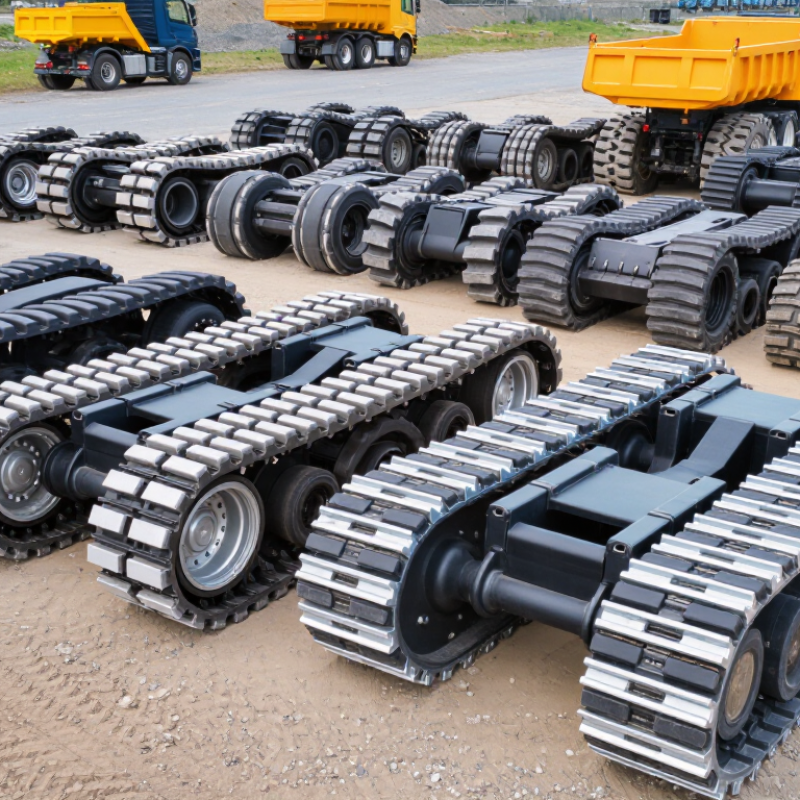
Dumper Track Basics and Their Role in Off-Road Transport
Dumper tracks are the foundation of stable off-road transport. They spread machine weight across soft soil, reducing rutting and improving traction on mud, gravel, and uneven slopes. This matters.
Tracked dumpers commonly use rubber tracks, steel tracks, or wide low-pressure tracks. Rubber tracks suit mixed worksites and reduce surface damage. Steel tracks resist sharp rocks and heavy abrasion. Wide tracks perform well on wet ground, but they may increase transport width.
A compact tracked dumper fits narrow construction areas and landscaping projects. Larger articulated versions carry more material across rough terrain. Their pivoting frames help maintain contact on uneven ground. However, track design alone cannot guarantee safe movement. A heavily loaded machine can still slide on a wet incline. That assumption fails.
Field inspections often reveal neglected track tension and damaged rollers. These issues raise fuel use and shorten service life. Buyers should compare payload, ground pressure, turning clearance, and local repair support. Undercarriage parts may be harder to source in remote markets. Check those details before purchase.
Operators also need practical controls. A low center of gravity helps, but careful loading remains essential. Loose soil can hide rocks, trenches, or weak edges. Experienced users slow down before changes in slope, not after. Small mistakes become expensive quickly.
Main Dumper Track Types Available to Global Buyers in 2026
Tracked dumpers are increasingly selected for muddy sites, steep access roads, and soft ground. Their track systems spread machine weight more evenly than wheels. In practice, buyers usually compare rubber tracks, steel tracks, and interchangeable track assemblies.
Rubber tracks suit landscaping, indoor construction, farming, and finished surfaces. They create less noise and reduce surface damage. Steel tracks offer stronger resistance against sharp stones, demolition debris, and abrasive soil. However, they can mark paved areas and require careful tension checks. Some tracked dumpers use wide, low-ground-pressure tracks for wetlands or loose soil. Narrower tracks can improve access through gates and tight work areas. The choice depends on payload, terrain, operating hours, and local repair support. A cheaper configuration may become expensive when replacement parts travel across borders.
Tips: Check track width, tread pattern, rubber compound, steel thickness, and undercarriage access before ordering. Ask for measured ground pressure, not only general marketing claims. Confirm spare track availability, delivery time, warranty coverage, and service instructions. Inspect the final machine drawings carefully. Small differences matter.
Experienced operators also examine turning behavior on slopes and the effort needed for daily cleaning. Mud packed inside the rollers can accelerate wear. Rubber tracks may perform poorly on severe rocky ground, while steel tracks may be excessive for garden projects. No option fits every site perfectly. A practical trial, when available, can reveal problems that specifications miss.
Key Performance Differences Among Tracked Dumper Models
2026 Top Dumper Tracks Types for Global Buyers?
Key Performance Differences Among Tracked Dumper Models
Tracked dumpers differ most in payload, ground pressure, and travel stability. Off-Highway Research’s 2024 compact equipment review places common tracked dumper capacities between 0.5 and 10 tonnes. Smaller units suit narrow gardens, tunnels, and renovation sites. Larger models handle quarry access roads and heavy earthmoving. Bigger is not always better.
Technical datasets reviewed against ISO 16754 show typical ground pressures near 0.2–0.5 kg/cm². Wider tracks reduce rutting on wet soil and soft clay. Narrow tracks improve passage through gates and restricted corridors. However, narrow undercarriages can feel less stable on side slopes. That trade-off is easy to underestimate.
Gradeability also separates model types. Many compact units advertise working angles around 25–30 degrees, while heavy-duty versions may approach 35–40 degrees under controlled conditions. These figures depend on payload, surface grip, and operator judgment. Travel speeds commonly remain near 2–6 km/h, so cycle time depends more on route length and dumping design. A 2024 European Commission non-road machinery review highlights the importance of fuel efficiency and emissions compliance in equipment selection. Buyers should compare measured fuel use, not only engine power. In practice, hydraulic cooling, loading height, and rollover protection can matter more than a glossy specification sheet. Some published figures still need independent verification.
How to Match Dumper Tracks With Terrain, Load, and Project Needs
2026 Top Dumper Tracks Types for Global Buyers
How to Match Dumper Tracks With Terrain, Load, and Project Needs
Choosing dumper tracks starts with ground conditions, not appearance. Soft clay, wet farmland, and landscaped soil need wide rubber tracks. They spread machine weight and reduce deep ruts. Rocky construction sites demand stronger steel tracks with reinforced links. Steel resists sharp debris better, but it can damage finished surfaces.
Load weight changes the decision. A heavily loaded dumper needs tracks with suitable load ratings, strong rollers, and reliable tension control. Check the operating weight, payload, and travel speed together. A track may look durable yet fail under repeated overloads. That mistake is expensive. Allow extra capacity for uneven ground and sudden braking.
Project distance also matters. Rubber tracks suit short routes, indoor work, and noise-sensitive areas. Steel tracks perform better during harsh excavation and frequent contact with broken stone. For steep slopes, choose deep tread patterns and verify the machine’s center of gravity. Wider tracks improve flotation, but they may reduce turning space. Measure access routes before ordering.
Inspect tread depth, sidewall damage, bolt condition, and undercarriage wear regularly. Small cracks can grow quickly in cold or abrasive conditions. Do not rely only on supplier descriptions; compare technical data with actual site demands. A local terrain test is often useful, although it can delay purchasing. That delay may prevent the wrong track choice.
2026 Top Dumper Track Types for Global Buyers
How to match tracked dumper configurations with terrain, payload, and project requirements
Best for narrow access roads, landscaping, utility work, and residential construction. Typical payload: 0.5–2 metric tonnes.
A practical balance for muddy construction sites, forestry access, and uneven ground. Typical payload: 2–5 metric tonnes.
Suitable for quarry support, infrastructure projects, steep terrain, and sustained off-road hauling. Typical payload: 5–10 metric tonnes.
Designed for large earthmoving projects where high payload and low ground disturbance are priorities. Typical payload: 10–20 metric tonnes.
The chart uses the midpoint of commonly published payload ranges for generic tracked dumper classes. Final selection should also consider ground pressure, track width, slope capability, turning space, discharge configuration, and local transport limits.
Global Buying Factors: Cost, Support, Compliance, and Maintenance
2026 Top Dumper Tracks Types for Global Buyers?
Global buyers should compare total ownership cost, not only the invoice price. Rubber tracks suit paved yards and sensitive ground, while steel tracks offer stronger grip on rocky, wet sites. The wrong choice increases fuel use and downtime. A 2024 Off-Highway Research market review identifies Asia-Pacific as the largest construction-equipment region, but service quality differs widely between countries. Local parts stock matters. So does technician training.
Compliance can change the purchase decision. The U.S. Environmental Protection Agency states that Tier 4 Final engines reduce particulate matter by about 50% and nitrogen oxides by about 80% against earlier standards. European buyers may require Stage V conformity. Ask for engine certificates, noise data, and traceable technical documents. A cheap machine without approved documentation can become expensive at the border. Support contracts should define response time, warranty limits, software access, and emergency parts delivery. Field experience suggests these details are often ignored during tendering.
Request a 24-month maintenance-cost forecast. Compare track life in operating hours, not months. Inspect the undercarriage after a loaded test cycle. Use the manufacturer’s service schedule, but question unrealistic intervals. A spreadsheet can still mislead. Include fuel, transport, operator training, taxes, and disposal costs. ISO 55000 asset-management guidance supports lifecycle planning, yet actual site records remain more valuable than generic estimates. Track failures, idle time, and repair hours before choosing the final dumper type.
